


Pilnas surinkimas aliuminis produktas apdorojimas metodai
Aliuminis yra labiausiai plačiai naudotas ir plačiai naudojamas metalas medžiaga tarp spalvotųjų metalų, ir jo pritaikymas diapazonas is nuolat plečiantis. Gaminys aliuminis gaminiai gaminamas naudojamas aliuminis medžiagos are įvairios ir nesuskaičiuojamas, su virš 700000 tipai pagal į statistiką. Nuo the construction and decoration industry to the transport and aerospace industries, various industries have different needs. Šiandien, the editor will introduce the processing technology of aluminium products and how to avoid processing deformation.
privalumai ir charakteristikos aliuminis yra kaip seka:
1. Mažas tankis. The density of aluminium is about 2.7g/cm3. Its density is only one-third of of of iron or copper.
2. Aukštas plastiškumas. Aliuminis turi geras lankstumas ir gali pagamintas į įvairius produktus per slėgį apdorojimą metodus tokius ekstruziją ir tempimą.
3. Korozija Atsparumas. Aliuminis is a labai neigiamai įkrautas metalas kad formos a apsauginis oksidas plėvelė ant jo paviršius pagal natūralios sąlygos arba anodinis oksidacija, ir turi daug geriau korozija atsparumas nei plienas.
4. Lengva to sustiprinti. Stiprumas iš grynas aliuminis is ne aukštas, bet it gali būti patobulinta pagal anodavimas.
5. Lengvas paviršius apdorojimas paviršius apdorojimas gali toliau pagerinti arba pakeisti paviršius savybės aliuminis aliuminis anodavimas procesas yra gana brandus ir stabilus - - 2c buvo plačiai naudojamas naudojamas apdorojimas aliuminio produktai.
6. Geras laidumas, lengva perdirbti.
Aliuminis produktas apdorojimas technologija
1. Šaltas štampavimas
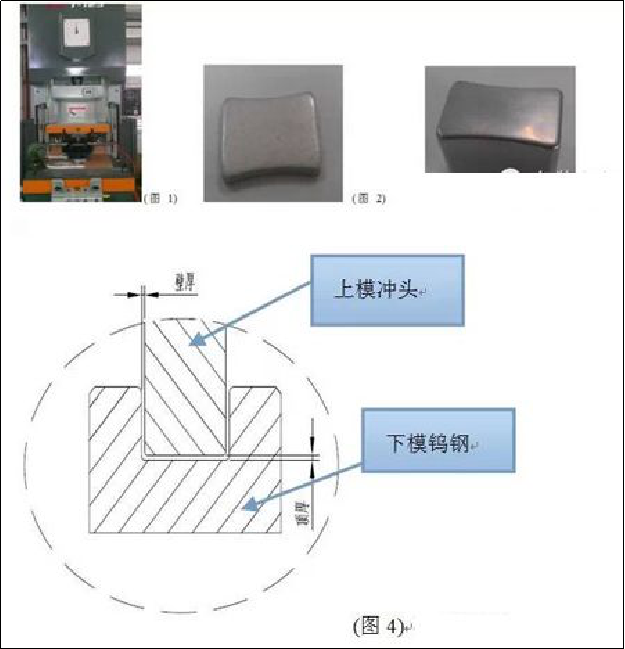
Naudokite medžiagą aliuminį daleles. Naudojimas ekstruzija mašinos ir formos vienkartinis liejimas yra tinkamas cilindriniai produktai arba produktas formos tai yra sunku pasiekti tempimas procesai, toks as elipsinis, kvadratinis, ir stačiakampis produktai. (As parodyta in figūra 1 mašina, paveikslas 2 aliuminis dalelė, ir paveikslas 3 produktas)
The tonnage of the machine used is related to the cross-sectional area of the product. The gap between the upper die punch and the lower die tungsten steel is the wall thickness of the product, and the vertical gap to the bottom dead center when the upper die punch and the lower die tungsten steel are pressed is the top thickness of the product. (As shown in Figure 4)
Trūkumai: The production process is long, the product size fluctuates labai per the process, and the labor cost is high.
2. Tempimas
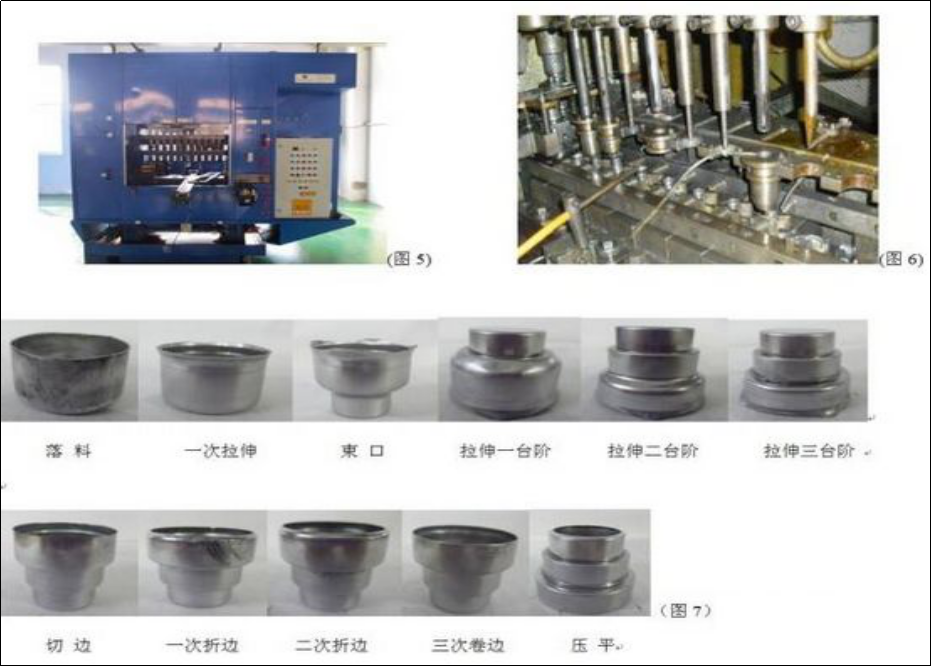
Naudojimas aliuminis lakštas medžiaga naudojimas nepertraukiamas liejimas mašina ir pelėsis kelias deformacijos susitikti forma reikalavimai % 2c tinkamas ne cilindriniai korpusai aliuminis produktai su lenkimu). (kaip parodyta parodyta figūra 5 mašina, figūra 6 pelėsiai 2c ir figūra 7 produktas)
Privalumai: Kompleksas ir pakartotinai deformuoti produktai turi stabilus matmenis kontrolė metu gamyba procesas, ir produktas paviršius is santykinai lygus.
Trūkumai: Aukštas pelėsis kaina, santykinai ilgas vystymasis ciklas, aukšti reikalavimai už mašina pasirinkimas ir tikslumas.
Paviršius apdorojimas aliuminis produktai
1. Smėliavimas (šūvis sprogdinimas)
procesas valymas ir grūdinimas metalas paviršiai naudojimas poveikis didelės spartos smėlis srautas.
Tai metodas paviršius apdorojimas aliuminis dalys gali pasiekti tam tikras laipsnis švarumas ir skirtingas šiurkštumas paviršius paviršius ruošinys, pagerinti mechaninės savybės ruošinys paviršius 2c tokiu būdu padidinimas nuovargis atsparumas ruošinys, didėjantis jo sukibimas to the coating, prailginimas the durability of the coating, and also facilitating the leveling and decoration of the coating. We often see this procesas in įvairūs produktai of Apple.
2. Poliravimas
A machining method that utilizes mechanical, chemical, or electrochemical effects to reduce the surface roughness of workpieces, in order to obtain a bright and flat surface. The polishing process mainly includes mechanical polishing, chemical polishing, and electrolytic polishing. Aluminum parts can achieve a mirror like effect similar to stainless steel after mechanical polishing and electrolytic polishing. This process gives people a feeling of high-end, simple, and fashionable future.
3. Viela piešimas
Metalas viela piešinys is gamyba procesas iš pakartotinai grandymas aliuminis plokštės su švitriniu popieriumi to sukurti linijas. Brėžinys gali būti padalintas į tiesią liniją brėžinį, netaisyklingą liniją piešinį, spiralę liniją brėžinį, ir siūlą piešimą. Metalas viela piešimas procesas skardinė aiškiai rodyti kas mažytis pėdsakas, taigi davimas a smulkūs plaukai blizgesys in the metalas matinis, ir the product kombainai mada ir technologija.
4. Aukštas blizgus pjovimas
Using a precision carving machine, the diamond knife is reinforced on the high-speed rotating (usually 20000 rpm) spindle of the precision carving machine to cut parts, creating local bright areas on the surface of the product. The brightness of cutting highlights is influenced by the speed of the milling drill bit. The faster the drill bit speed, the brighter the cutting highlight, while the opposite is true, making it darker and more prone to tool lines. High gloss and high gloss cutting are particularly common in the application of mobile phones, such as the iPhone 5. In recent years, some high-end TV metal frames have adopted high gloss milling technology, combined with anodizing and wire drawing processes, making the TV overall full of fashion and technological sharpness.
5. Anodavimas
Anodavimas nurodo į elektrocheminį oksidaciją iš metalų arba lydinių, in kuris aliuminis ir jo lydiniai forma an oksidas plėvelė ant aliuminis produktai (anodai) po atitinkami elektrolitai ir specifinis procesas sąlygos dėl į veiksmą ištaiso taikoma srovė. anodavimas ne tik išsprendžia the defektai in paviršius kietumas ir susidėvėjimas atsparumas iš aliuminio, but taip pat prailgina jo servisas gyvenimas ir patobulinimai jo estetika. It turi tapo an nepakeičiama dalis iš aliuminio paviršius apdorojimas ir yra šiuo metu labiausiai plačiai naudojamas ir sėkmingas procesas.
6. Dviguba spalva anodas.
Two color anode refers to anodizing a product and assigning different colors to specific areas. The dual color anodizing process is less commonly used in the television industry due to its complexity and high cost; But the contrast between the two colors better reflects the high-end and unique appearance of the product.
Procesas priemonės ir veiklos įgūdžiai sumažinti sumažinti aliuminis apdorojimas deformacija
Yra daug priežasčių dėl the deformacija iš aliuminio dalių per apdorojimo, kurie yra susiję į medžiagą, dalis forma, gamyba sąlygos, etc. Yra daugiausia the following aspects: deformacija sukelta iki vidinis įtempis in the blank, deformacija sukelta pagal pjovimas jėga ir pjovimas šiluma, ir deformacija sukelta pagal užspaudimas jėga.
Procesas priemonės sumažinti apdoroti deformacija
1. Sumažinti vidinis stresas vilna auginimas
Natūralus arba dirbtinis senėjimas ir vibracija apdorojimas gali iš dalies pašalinti the internal stress of the blank. Pre processing is also an effective process method. Due to the large margin, there is also a large amount of deformation after processing for the rough parts of the fat head and big ears. If the excess parts of the blank are pre processed and the excess of each part is reduced, it can not only reduce the processing deformation of subsequent processes, but also release some internal stress after being left for a period of time after pre processing.
2. Tobulinimas pjovimas gebėjimas pjovimas pjovimas įrankiai
medžiaga ir geometriniai parametrai pjovimas įrankiai turi svarbus smūgis pjovimas pjovimas jėga pjovimas šiluma teisingas pasirinkimas pjovimas įrankiai esminis mažinimas mažinimas dalis apdirbimas deformacija.
1) Protingai pasirinkti the geometric parameters of the cutting tool.
① Front angle: While maintenance the strength of the cutting edge, selecting a larger front angle can not only sharpen the edge, but also reduce cutting deformation, making chip removal smooth, thereby reduce cutting cutting force and cutting temperature. Avoid useing negative grėblys angle tools.
② Back angle: The size of the back angle has a direct impact on the wear of the back cutting surface and the quality of the apdirbt surface. Pjovimas storis is an important condition for select the back angle. During rough frezavimas, due to the large feed rate, heavy cutting load, and high heat generation, it is required that the tool has good heat discipation conditions. Todėl, a mažesnis atgal kampas turėtų būti pasirinktas. Kada preciziškas frezavimas, it is reikalinga to turi a aštrus kraštas to redukcija trintis tarp the back pjovimas paviršius ir the apdirbimas paviršius, ir to redukcija elastinga deformacija. Todėl, a didesnis atgal kampas turėtų būti pasirinkti.
③ Spiral angle: To ensure smooth frezavimas and reduce frezavimas force, the spiral angle should be selected as large as possible.
④ Main nuokrypis kampas: redukcija the main nuokrypis kampas tinkamai gali pagerinti šiluma išsklaidymas sąlygos ir žemiau the average temperatūra of the processing area.
2) Tobulinti įrankis struktūra.
① Reduce the number of frezavimas pjaustytuvas dantys ir padidinimas the chip holdingas space. Due to the high plastiškumas of aluminium materials, there is significant pjovimas deformacija perdirbimas, kuris reikalauja a didesnis lustas laikymas tarpas. Todėl, it is patartina turėti turėti a didesnis lustas laikymas griovelis dugnas spindulys ir mažiau frezavimas pjaustytuvas dantys.
② Smulkus šlifavimas iš ašmenys dantys. The roughness value of the cutting edge of the cutter teeth should be less than Ra=0%4um. Before use a new knife, a fine oilstone should be used to gentley grind the front and back of the blade teeth a few times to pašalinti any remaining burrs and slight serrations when grinding the blade teeth. In this way, not only can cutting karštis be sumažintas, but pjovimas deformacija is taip pat santykinai mažas.
③ Griežtai kontrolė the wear standards of cutting tools. After tool wear, the surface roughness value of the workpiece increases, the cutting temperature rises, and the deformation of the workpiece increases accordingly. Todėl, in addition to selecting tool materials with good wear resistance, the tool wear standard should not exceed 0.2mm, otherwise is easy to produce chip deposits. Metu pjovimas, the temperatūra of the ruošinys turėtų paprastai ne viršyti 100 laipsnis to užkirsti kelią deformacijai.
3. Improving the clamping method of workpieces
Skirta plonasienis aliuminis dalys prastas standumas% 2c sekimas užspaudimas metodai gali būti naudojamas sumažinti deformacija% 3a
① For plonasienis įdėklas dalys, if a trys žandikaulis self centring chuck or spring chuck is used to clamp radially, once loosened after processing, the workpiece will neišvengiamai deformuotis. At this point, the method of compressing the axial end face with good rigidity should be used. Use the internal hole of the part for positioning, make a threaded through shaft and insert it into the internal hole of the part. Use a cover plate to press the end face sandariai and then priveržkite it with a nut. When processing the outer circle, clamping deformation can be avoided, taigi pasiekimas patenkinamas apdirbimas tikslumas.
② When processing thin-walled thin plate workpieces, it is best to use vacuum suction cups to obtain evenly distributed clamping force, and then use smaller cutting amounts to process, which can effectively prevent workpiece deformation.
Papildomai, the stuffing method can also be used. To increase the process rigidity of thin-walled workpieces, media can be filled inside the workpiece to reduce deformation during clamping and cutting processes. For example, injection urea melt containing 3% to 6% kalio nitrate into the workpiece, and after processing, immersing the workpiece in water or alcohol can dismelt and pour out the filler.
4. Pagrįstai išdėstyti procesas;
During high-speed cutting, due to large machining allowance and intermittent cutting, the milling process often generates vibration, which affects machining accuracy and surface roughness. Therefore, the CNC high-speed cutting process can generally be divided into rough machining, semi precision machining, corner cleaning machining, precision machining and other processes. For parts with high precision requirements, sometimes secondary semi precision machining is required, followed by precision machining. After rough machining, the parts can be naturally cooled to eliminate the internal stress generated by rough machining and reduce deformation. The margin left after rough machining should be greater than the deformation, generally 1-2mm. During precision machining, the surface of the parts should maintain a uniform machining allowance, generally ranging from 0.2 to 0.5mm, to keep the cutting tool in a stable state during the machining process. This can greatly reduce cutting deformation, achieve good surface machining quality, and ensure the accuracy of the product.
Operaciniai įgūdžiai sumažinimas sumažinimas apdirbimas deformacija
1. Už dalys su dideliu apdirbimu pašalpa, in užsakymu to turėti geriau šiluma išsklaidymas sąlygos per apdirbimas procesas ir vengti šiluma koncentracija, simetriškas apdirbimas turėtų būti naudojamas per apdirbimas. If there is a 90mm storas lakštas metalas kad reikia to be apdirbtas to 60mm, if one side is frezuotas ir the other side is frezuotas immediately, and the flatness reach 5mm when machining to the final size in one go; If repeat feed symmetric machining is used, each side is machined twice to the final size, ensuring a flatness of 0.3mm.
2. Jei yra yra daug ertmių on the sheet metal part, it is not adadvice to use the sequential processing method of one cavity for each cavity during processing, as this can easily cause uneven stress on the part and deformation. Adopting multiple layers of processing, each layer is processed simulely to all cavities as much as possible, and then the next layer is processed to make the parts to uniformly stressed ir sumažinti deformacija.
3. Sumažinti pjovimas jėga ir pjovimas karštis iki keičiant the pjovimas kiekis. Tarp tris elementai išpjovimas parametrai, the back feed has a reikšmingas poveikis on pjovimas jėga. Jei apdirbimas pašalpa is per didelis ir pjovimas jėga of a vienas pravažiavimas is too didelis, it bus ne tik priežastis deformacija of the parts, but also affect the rigidity of the machine tool velenas ir reduce the durability of the įrankis. Jei kiekis iš/atgal pjovimas is sumažintas, it bus labai sumažins gamyba efektyvumas. Tačiau, greitas frezavimas is dažniausiai naudojamas in CNC apdirbimas įveikti šis iššūkis. Nors redukcija the amount of back cutting, as long as the feed rate is atitinkamai padidintas ir the machine speed is increased, the cutting force can be reduced while užtikrinimas apdirbimas efektyvumas.
4. Užsakymas išpjovimas taip pat poreikiai to būti atsargiai apsvarstyta. Grubus apdirbimas akcentavimas tobulinimas apdirbimas efektyvumas ir siekimas a pjovimas greitis per vienetas laikas. Paprastai, atvirkštinis frezavimas gali būti naudojamas. Iškirpti išjungti perteklius medžiaga ant paviršius of the blank at the fastest speed and in the trumpest time possible, and baziškai form the geometric contour required for precision machining. Precision machining emphas high precision and quality% 2c ir it is patartina to naudoti pirmyn frezavimas. Nes pjovimas storis išpjovėjas iš pjovėjas dantys palaipsniui mažėja nuo maksimalus iki nulis per pirmyn frezavimas, the degree of work grūdinimas is labai sumažintas, o taip pat redukcija the degree of deformacija of the parts.
5. Plonos sienelės ruošiniai reprodukcija deformacija per apdirbimas due to užspaudimas, kuris yra sunku vengti lygus per preciziškas apdirbimas. To minimizuoti the deformacija of the workpiece, the clamping part can be loosened before the final size is reached during precision machining, allowing the workpiece to free return to its original state. Tada, it can be šiek tiek priveržtas to užtikrinti kad the workpiece is tvirtai clamped (visiškai pagrįsta on hand feel), which can reach the desired machining effect. In short, it is best for the clamping force to act on the supporting surface, and the clamping force should act in the direction of good workpiece rigidity. On the premise of užtikrinimas that the workpiece is not loose, the small the clamping force% 2c the geriau.
6. Kai apdorojimas dalys su a cavity, it is patartina ne leisti leisti the frezavimas pjaustytuvas tiesiogiai skverbtis the part like a drill bit, resulting in insufficient chip space for the frezavimas cuttering c unsmooth chip removal, perkaitimas, išplėtimas, įrankis lūžimas, ir kita neigiama reiškiniai. First, use a drill bit of the same size or one size larger than the milling cutter to drill the tool hole, ir tada naudoti the frezavimas pjaustytuvas į malūną it. Alternatyviai, CAM software can be used to produce spiral cutting programs.


